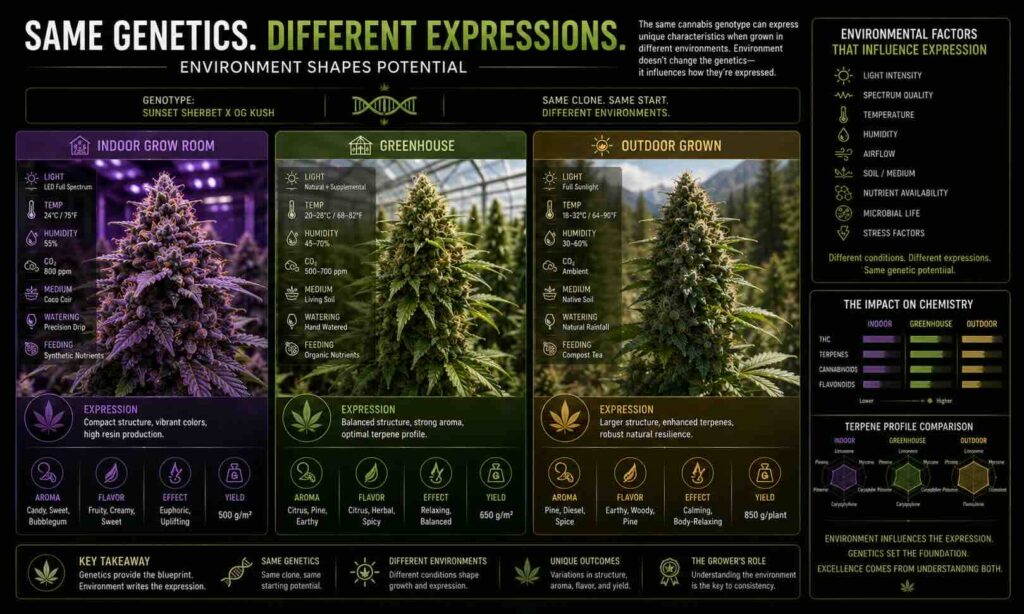
Cannabis genetics provide the foundation for every plant, but genetics alone do not determine the final outcome of a cultivation project. Environmental conditions play a crucial role in how genetic traits are expressed throughout a plant’s life cycle. This relationship between genetics and environment is one of the most fascinating aspects of cannabis cultivation and helps explain why the same cultivar can sometimes perform differently under varying conditions.
Understanding genetic expression allows growers to make better cultivation decisions and maximize the potential of their chosen genetics. While a plant’s DNA establishes its capabilities, environmental factors influence how those capabilities are revealed during growth and flowering.
The Relationship Between Genetics and Environment
Every cannabis plant contains a genetic blueprint that influences traits such as growth structure, vigor, flowering behavior, terpene production, and overall development. However, these traits do not exist in isolation. Environmental conditions interact with genetics throughout the plant’s life.
Temperature, humidity, light intensity, nutrition, airflow, and root health can all affect how genetic characteristics are expressed. Strong genetics provide potential, while environmental conditions help determine how much of that potential is realized.
This interaction explains why cultivation management remains such an important part of successful growing.
The Impact of Light on Genetic Expression
Light is one of the most influential environmental factors affecting cannabis development. The intensity, duration, and quality of light all contribute to how plants grow and mature.
Different lighting conditions can influence plant structure, internodal spacing, growth rate, and overall vigor. While genetics determine how a plant responds to light, cultivation conditions help shape the final expression of those traits.
Proper lighting strategies allow growers to support healthy development while helping plants reach their genetic potential.
Even exceptional genetics benefit from optimized environmental conditions.
Temperature and Climate Effects
Temperature plays a significant role in plant metabolism and overall growth. Cannabis cultivars often respond differently to environmental conditions based on their genetic background, making climate management an important consideration for growers.
Stable environmental conditions generally encourage more consistent plant development. Extreme fluctuations may influence growth patterns and affect the expression of certain traits.
Successful cultivation often involves creating an environment that supports healthy development while remaining compatible with the chosen genetics.
Understanding these interactions helps growers adapt cultivation strategies more effectively.
Nutrition and Plant Development
Nutrient availability also influences genetic expression. Healthy plants are better able to express the characteristics encoded within their genetics, while nutritional imbalances may limit development.
Genetics influence how plants utilize resources, but cultivation practices determine whether those resources are consistently available. A balanced approach to plant nutrition supports healthy growth and contributes to overall cultivation success.
Growers interested in exploring modern cannabis genetics can learn more through Ministry of Cannabis. Understanding the relationship between genetics and cultivation conditions helps cultivators make more informed decisions throughout the growing cycle.
Healthy environments help plants express their strongest characteristics.
Why Genetic Stability Still Matters
While environmental factors influence expression, stable genetics remain essential. A well-developed cultivar provides growers with greater predictability and consistency, making environmental management easier and more effective.
Professional breeding programs focus heavily on stability because consistent genetics allow growers to better evaluate environmental effects and cultivation practices. Without reliable genetics, it becomes more difficult to determine which factors are influencing plant performance.
Additional information regarding CBD legislation and industry developments can be explored through https://www.cbd.fr/blog/legislation-cbd.
The combination of stable genetics and effective cultivation management creates the strongest foundation for success.
Final Thoughts
Environment and genetics work together to shape every cannabis plant. Genetics establish the potential, while environmental conditions influence how that potential is expressed. Understanding this relationship allows growers to optimize cultivation practices and gain a deeper appreciation for the complexity of cannabis development.
As breeding programs continue advancing and cultivation knowledge expands, the interaction between genetics and environment will remain one of the most important subjects in modern cannabis cultivation.